General Attributes include:
- Planning Skills.
- Organisational Skills.
- Time Management.
- Team Working..
- Verbal and Written Communication Skills.
- Numeracy.
- Creativity.
1. Planning Skills.

Involves thinking ahead to decide what you need to do to achieve a goal within a given timescale, You might not need to write a plan but thinking about it and what could go wrong helps to ensure a measure of success in whatever you set out to do.
2. Organisational Skills.

This involves having a system or routine so that you complete everyday tasks as efficiently as possible. For example, organizing your work space includes having the things you need most (pens or pencils, your calculator, a stapler etc.) within arm's reach and then keeping everything tidily in its place. Planning and organisational skills are important because they demonstrate that an individual can organize, anticipate and manage a range of activities,which is very important.
3.Time Management.
To make the best use of your time, you need to manage it effectively. Having somewhere to keep track of appointments (whether on a wall chart, in a hand written diary or using and electronic calender) will help you to see what will be happening in the next day, week or year. It should help you to avoid double booking your time. It could also remind you to set aside time between appointments so that you can prepare properly for each event.

- Hand written diaries have the advantage of being small enough to carry around with you everywhere. They provide a written record of how you have spent your time and what will be on your agenda in the future.
- Electronic diaries are particularly useful in a working environment. For example, Microsoft outlook has a calender feature. Online diaries make setting up a meeting easier - you can see who is free and when and choose a convenient time. You can send the meeting agenda via email and each attendee's Outlook calendar will be updated automatically.

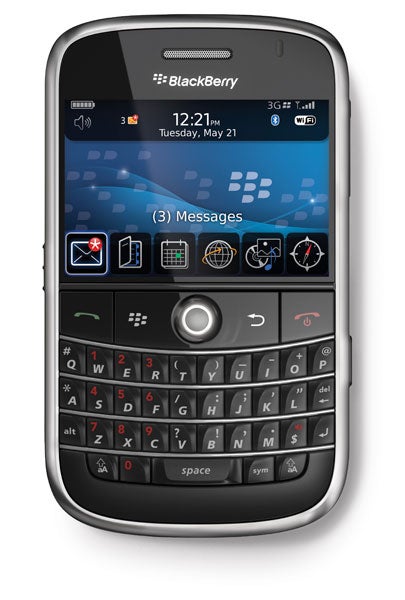
- Calender features on a mobile phone and PDAs such as Blackberry can be synchronized with electronic diaries such as Outlook. Many PDAs such as the Blackberry, are also portable communications devices using wireless mobile phone technology to provide email, telephone, text messaging and web browsing services. So someone who travels a lot can use there PDAs/Mobile phone when offline, but synchronize as soon as they have access to a computer e.g. via their laptop in a hotel room, or at an internet cafe.
4. Team Working.
Some people work in isolation, but most people work as part of a team. Being the member of a team brings responsibilities. You need to report to others in the team about what you are doing and to keep up to date with what they are doing.

5. Verbal and Written Communication Skills.
Communication within a team and within an organization is essential for the flow information. This communication may be verbal (within a meeting or a one-on0one discussion) or written (an emailed memo or the minutes of a meeting)
6. Numeric Skills.
Although most jobs do not require a high degree of mathematical skills, all jobs require some numeric skills. If you need to do calculations, you must be able to do them accurately. You should be able to use a calculator and know how to check your working by estimating the answer.
7. Creativity.
Creativity is needed in all lines of work, not just those involving some artistic output. Employees who can dream up ideas and are able to think laterally and 'out of the box' can make major contributions to the success of an organization. Some companies have a suggestion box - if you make a suggestion that helps the company to improve productivity, reduce waste or make the customer happier, you may be rewarded for your creativity.
In a working environment, creativity has to be channeled within an office full of people, with background noise of machinery and conversation. To allow ideas to come through, you might need to create your own space within this busy environment and find a place where you can think clearly. You may be able to spark ideas in a team environment, as in brainstorming session.
